 Projects / DRAUN by iamkrs
Look, I love streaming, but why does listening to my own FLAC collection feel like navigating a space station? I built DRAUN because I missed the days when music players felt like dedicated hardware, not ad-delivery engines. Inspired by Braun minimalism, vintage click-wheels, and retro E-Ink displays, DRAUN is a local-first Windows player built for people who actually care about their music collection.
Craft & Tech Stack:
The Itch (Challenge):
Modern streaming apps treat music like background noise and podcasts like mandatory homework. I wanted a player that treated an album like an event - where clicking 'Play' feels intentional and the UI gets out of the way of the tunes.
My Role:
Sole Designer + Developer. I sketched the hardware-inspired controls, obsessed over retro E-Ink typography, and then actually wrote the Electron + React code to bring it to life on Windows.
Platform:
Windows Desktop (Electron)
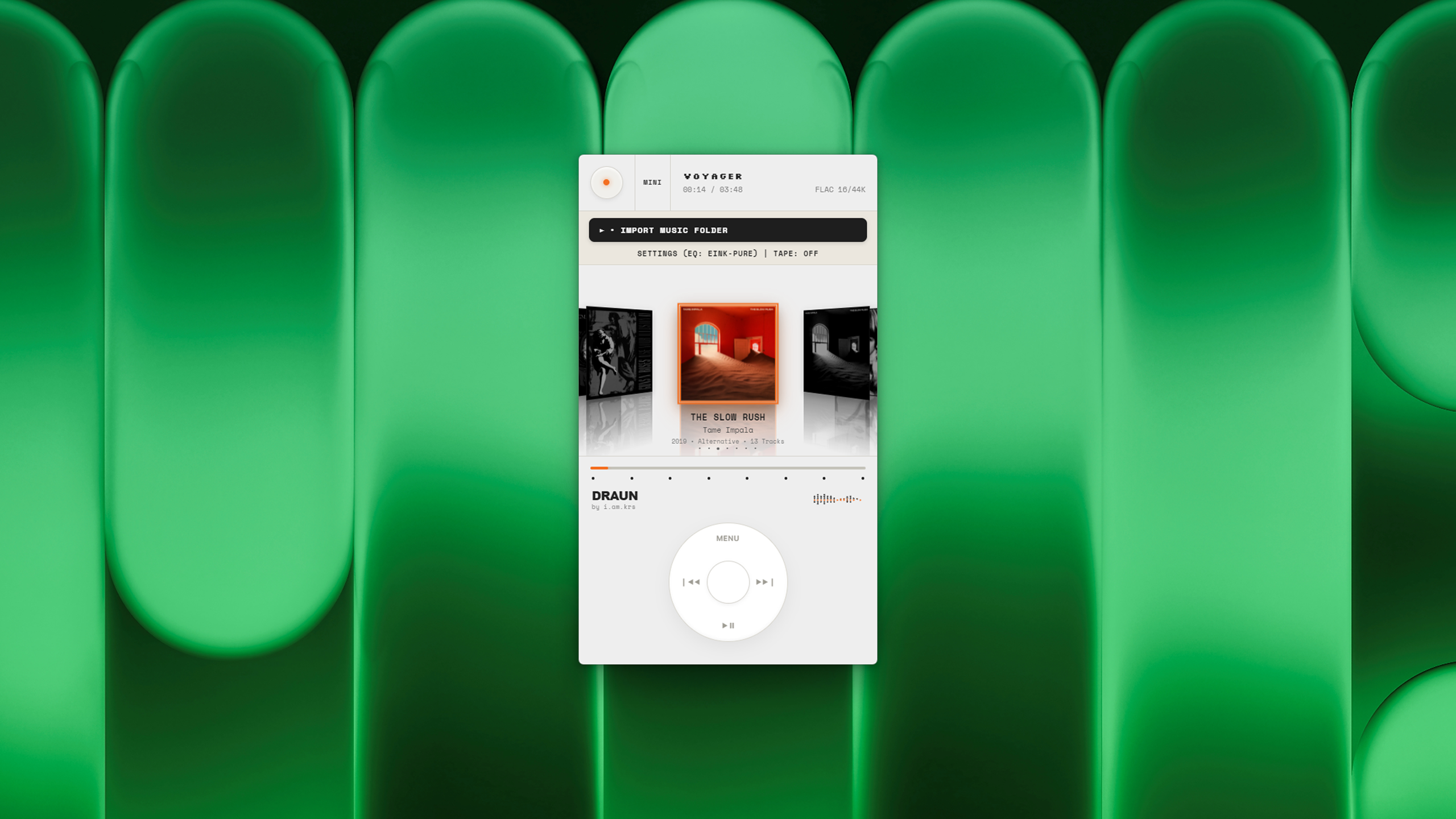
Desktop music apps are just bloated websites stuffed into a window. They push AI playlists, obscure your local files, and hide sound settings 5 sub-menus deep.
DRAUN is built like physical hardware for your screen. One click-wheel control, local-first library, Cover Flow nostalgia, live synced lyrics, and real analog-inspired audio toggles. Designed and coded by me in Electron.
The Specs at a Glance
Just your music. Zero algorithms allowed.
by iamkrs
Status: Built & Jamming
Designed and coded as a fully functional Windows music player in Electron.
- iPod-inspired click-wheel UX
- Cover Flow album flipping
- Local-first FLAC & MP3 engine
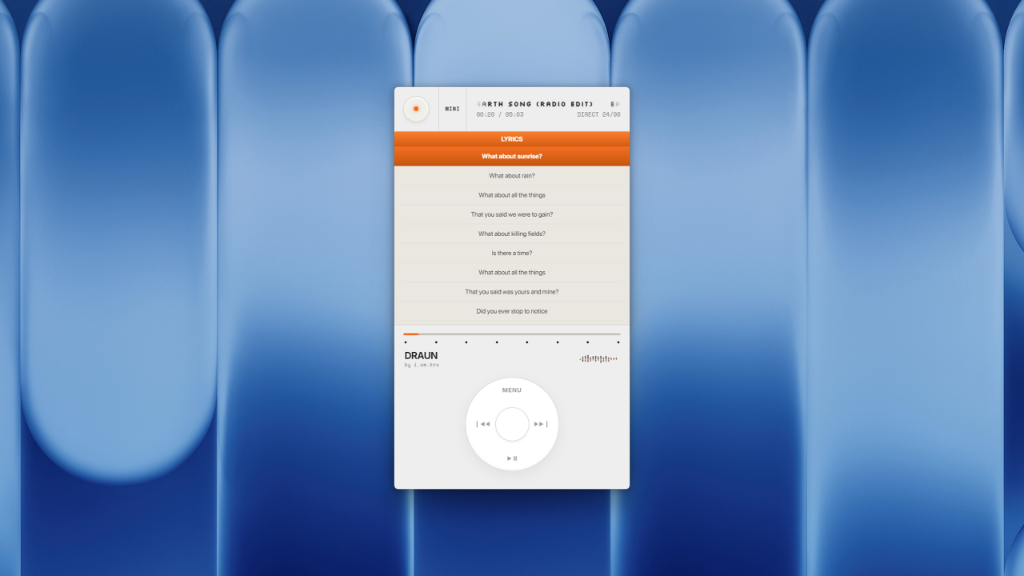
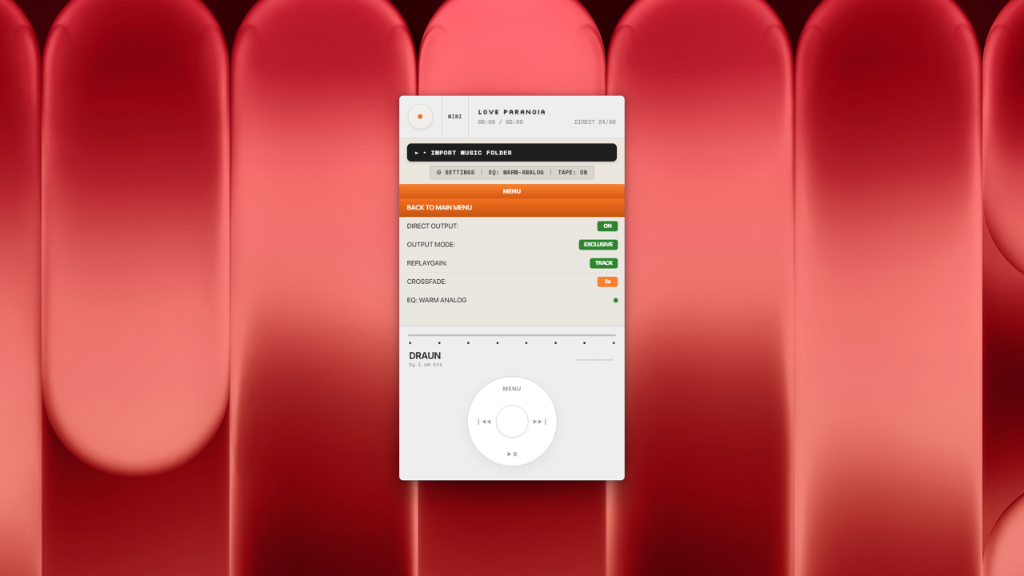
- Timecoded lyrics & tape warmth EQ
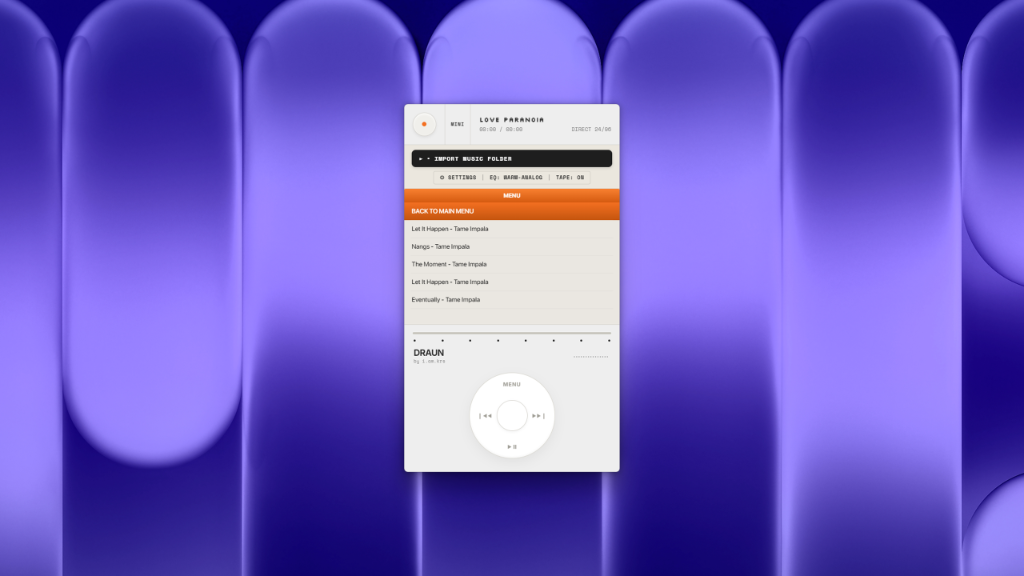
Interface & Visual Soundtrack
The Outcome
DRAUN started as a 'what if?' late-night design sketch and turned into a working Windows app. I designed every pixel and coded the entire application in Electron - integrating real-time audio analysis, timecoded lyrics parsing, Cover Flow rendering, and custom equalizer profiles into a smooth desktop experience.
Designer Takeaways
- Design the interaction physics first: Designing the click-wheel mechanics first forced every menu, list, and screen state to follow one simple physical rule.
- Constraints make UI feel cozy: Choosing an E-Ink color palette and minimalist layout forced me to strip away all visual junk. Less clutter = more music.
- If you design it, try coding it: Building the app in Electron meant my design ideas had to survive real-world desktop windowing, local file systems, and audio decoders.
- Nostalgia works when it's functional: Cover Flow and click-wheels aren't just retro eye candy - they make scanning 50GB of local music faster and way more fun.
- Build tools for the joy of it: DRAUN doesn't care about monthly active users or engagement metrics. It just plays tunes really, really well.
