 Projects / FunnelFox 360
FunnelFox 360 is a multi-dashboard CRM platform designed to centralize lead management, campaign analytics, and sales workflows. It brings leads from Facebook Ads, Google Ads, landing pages, and other acquisition channels into one action-oriented workspace for high-volume sales teams.
Services:
Challenge:
Sales and marketing teams were managing leads across disconnected platforms, making it difficult to track performance, eliminate duplicate leads, and move prospects efficiently through the pipeline.
Role:
Owned product design end-to-end: information architecture, user flows, high-fidelity UI, and the underlying design system, then partnered with engineering through a full developer handoff.
Sales and marketing teams were tracking leads across disconnected platforms (Facebook Ads, Google Ads, landing pages) with no single view of what was working, no way to catch duplicate leads, and reporting stitched together by hand.
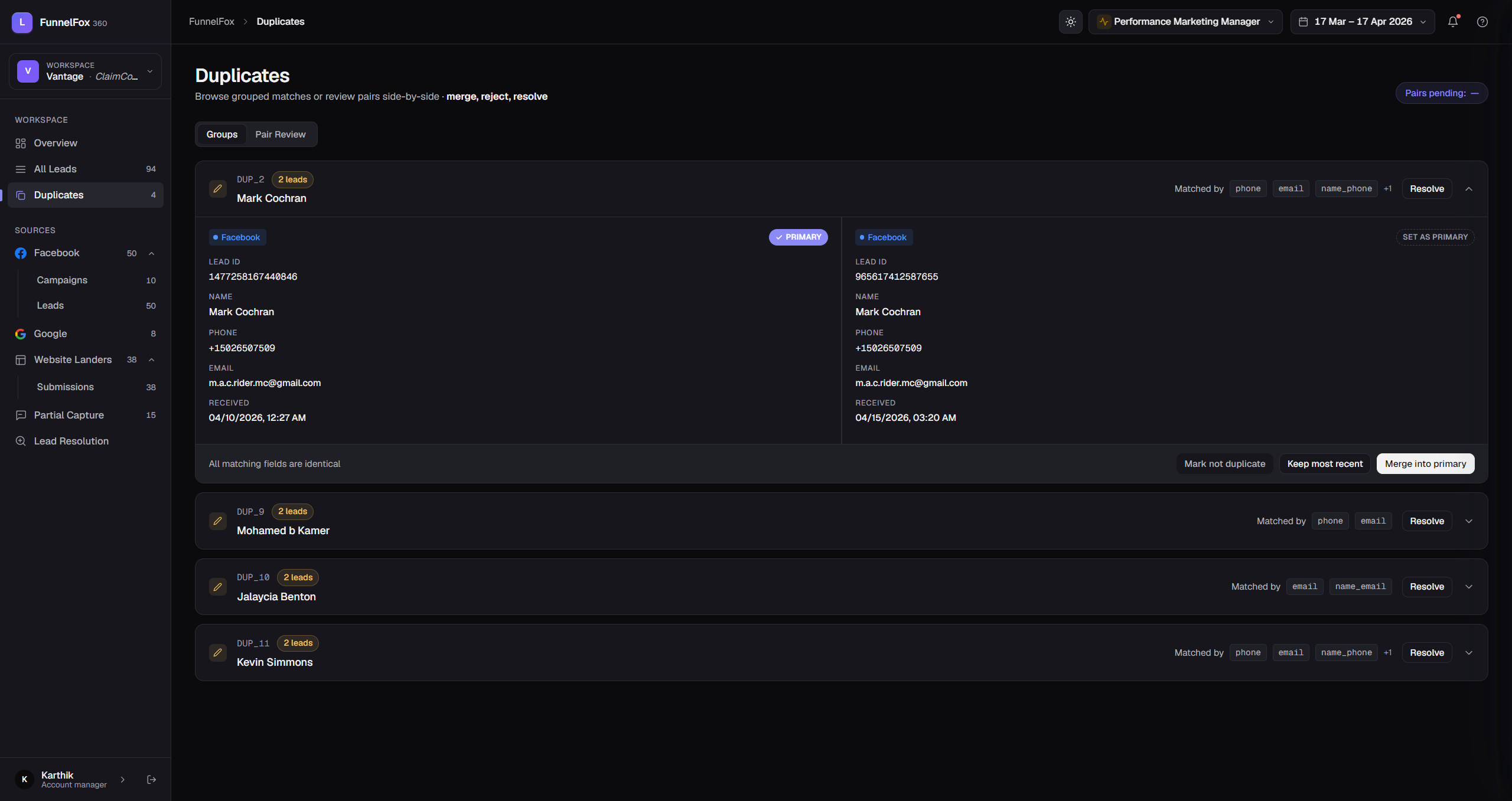
FunnelFox 360 unifies every lead source into one action-oriented CRM: real-time dashboards per channel, automatic duplicate detection, and a pipeline built for high-volume teams to actually work from daily, not just report from.
Impact
Built for teams that move fast.
360
Status: Shipped to Dev Team
Design complete and handed off for development.
- Streamlined lead tracking
- Action-oriented workflows
- Built for high-volume sales teams
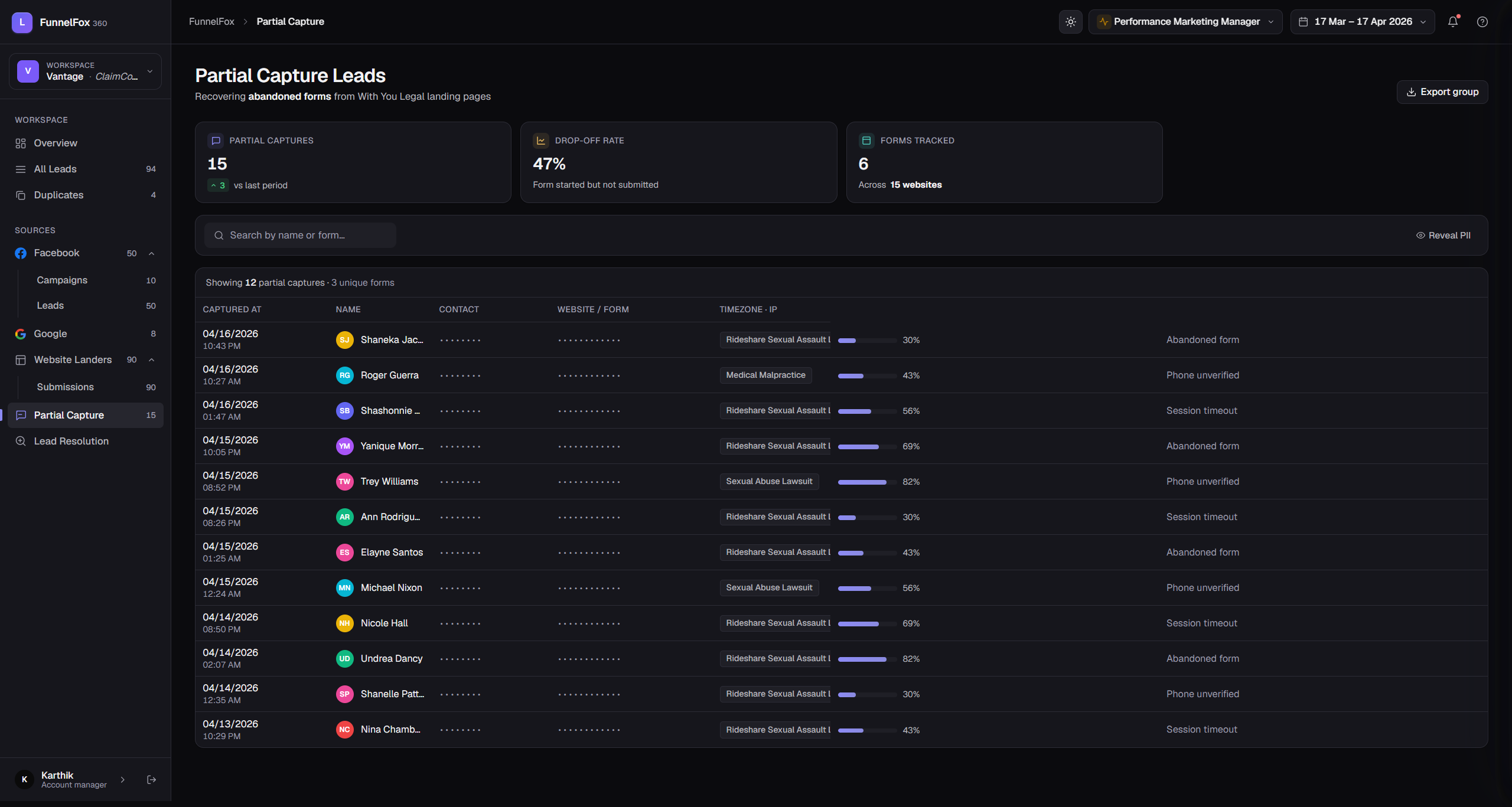
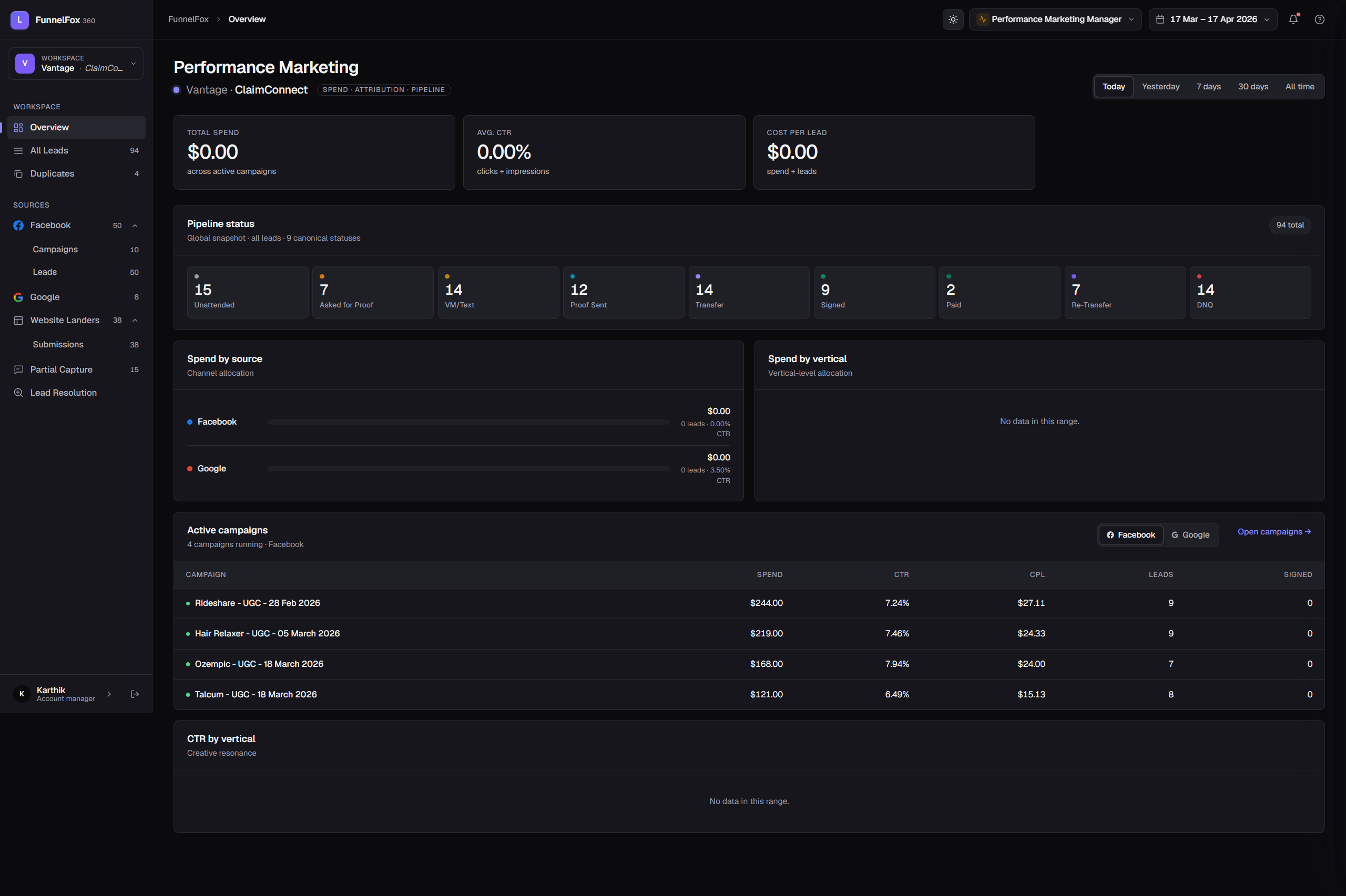
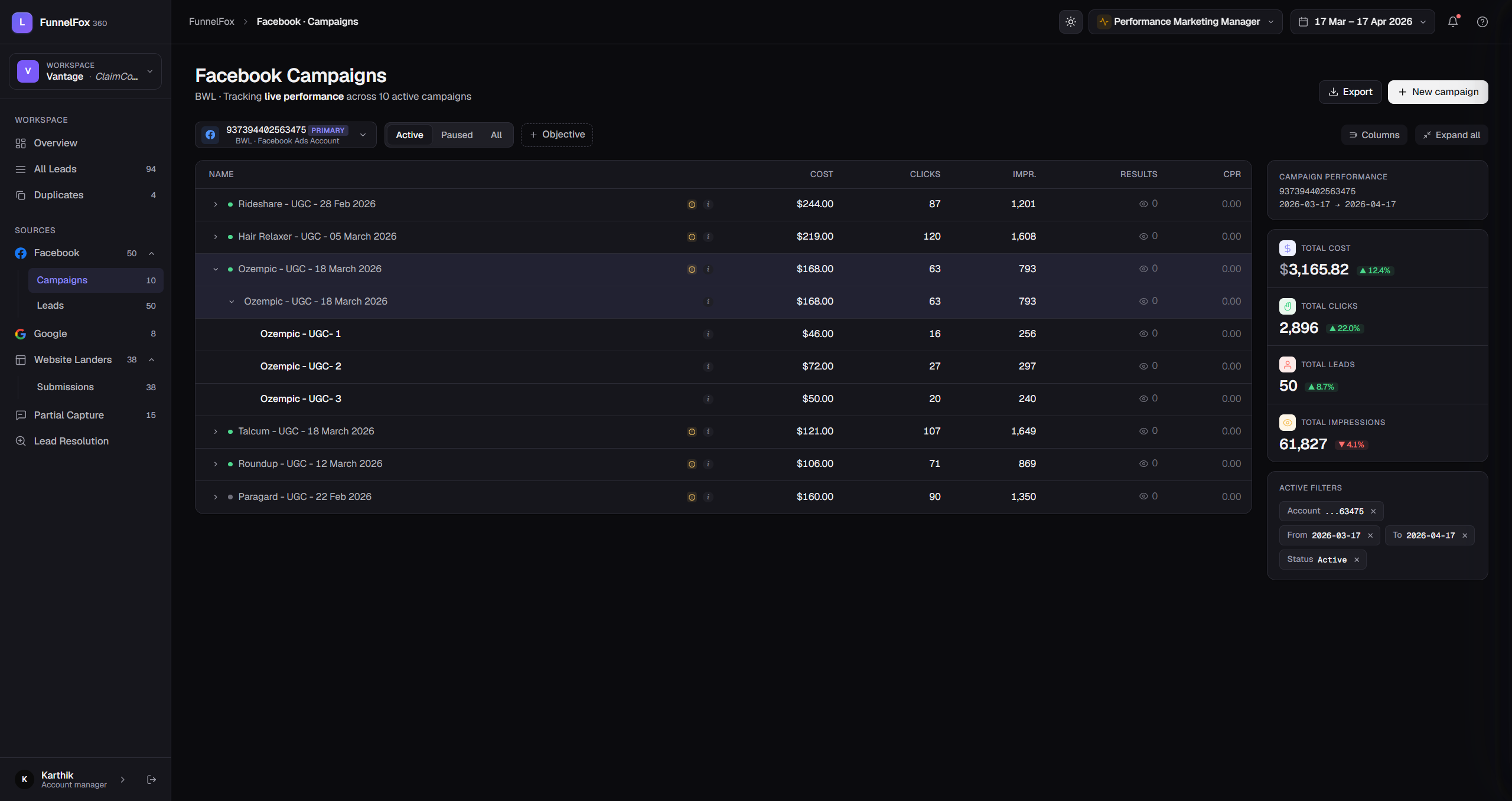
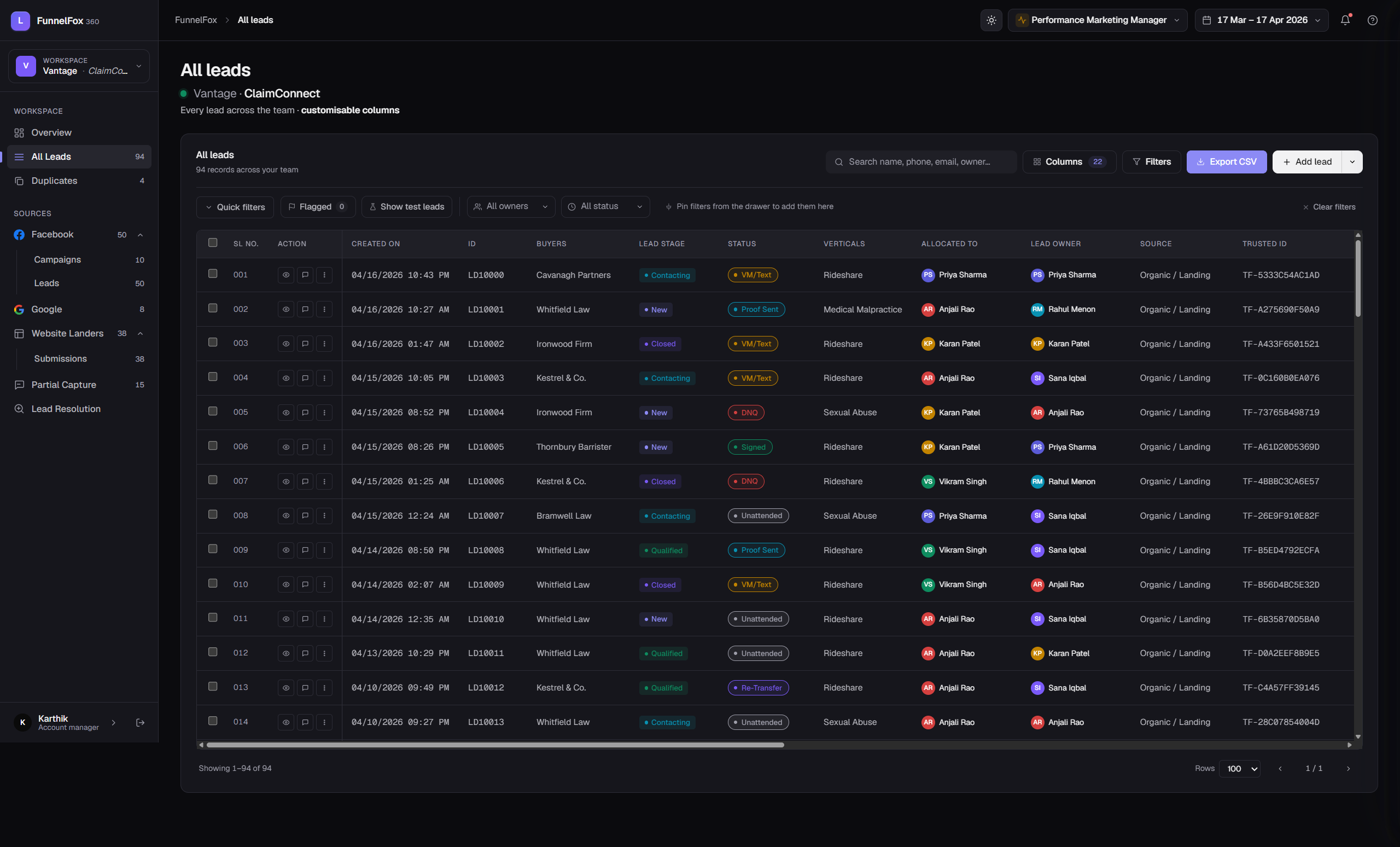
Product Screens
Outcome
FunnelFox 360 replaced a patchwork of disconnected lead trackers with a single CRM built around how sales teams actually work day to day. Dedicated dashboards for performance marketing, platform-specific campaigns, the full lead list, and duplicate review give every role a workspace suited to their job instead of one generic table. Nested breakdowns and filterable tables keep the data dense without becoming overwhelming. Design was handed off complete, with a documented system covering all 7 user roles, so engineering could build directly from source instead of reverse-engineering intent from static screens.
Key Takeaways
- Multi-role dashboards live or die on information architecture, not visual polish - the hardest part of this project was deciding what each role didn't need to see.
- Designing for high-volume, repetitive use means every interaction has to survive being done a hundred times a day; friction that's invisible in a demo becomes obvious at scale.
- A duplicate-detection flow is only as good as its trust signal - side-by-side comparison mattered more than the merge action itself.
- Handing off a system instead of a screen forced me to think in components and states from the start, rather than retrofitting consistency later.
