 Projects / VitacoreNexus HMS
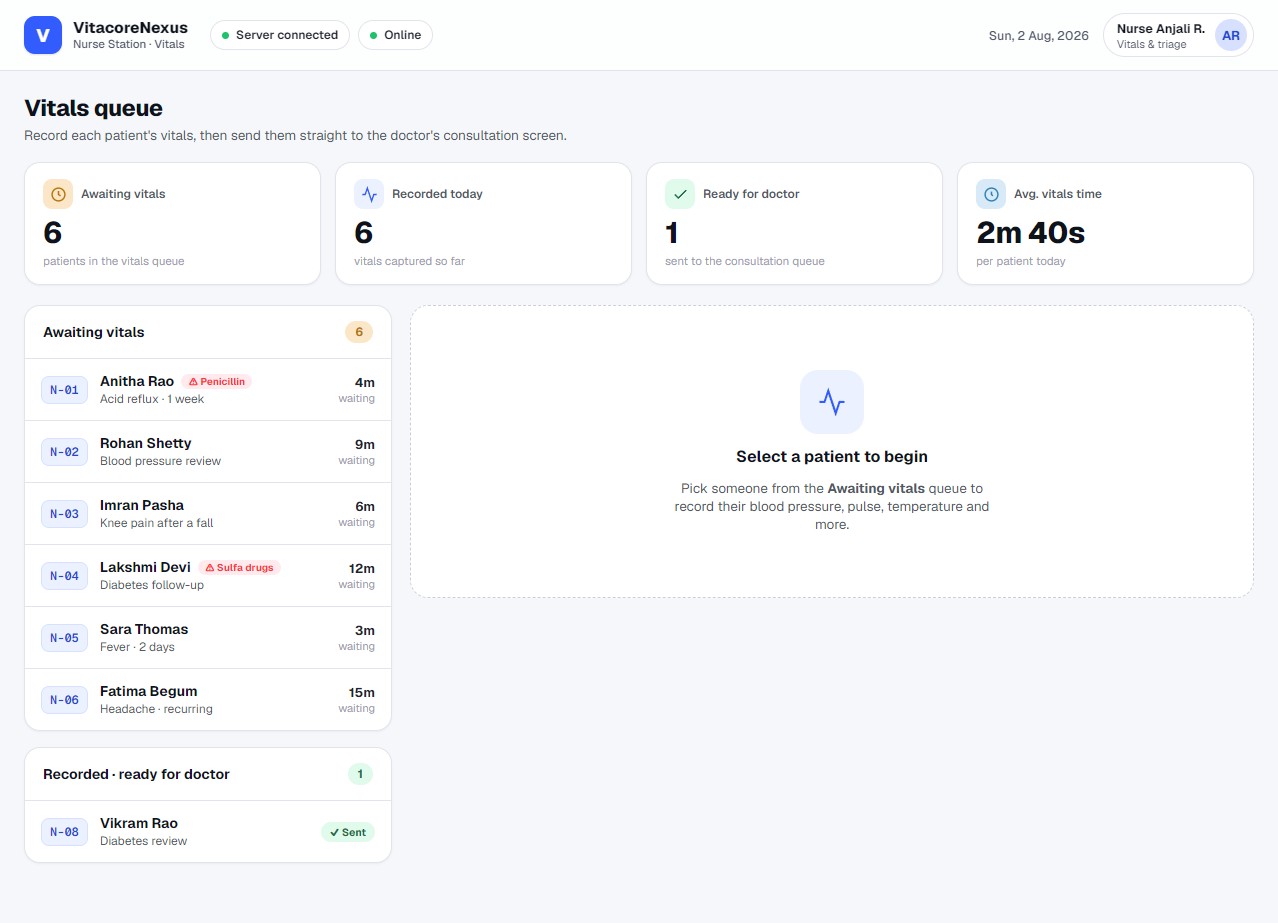
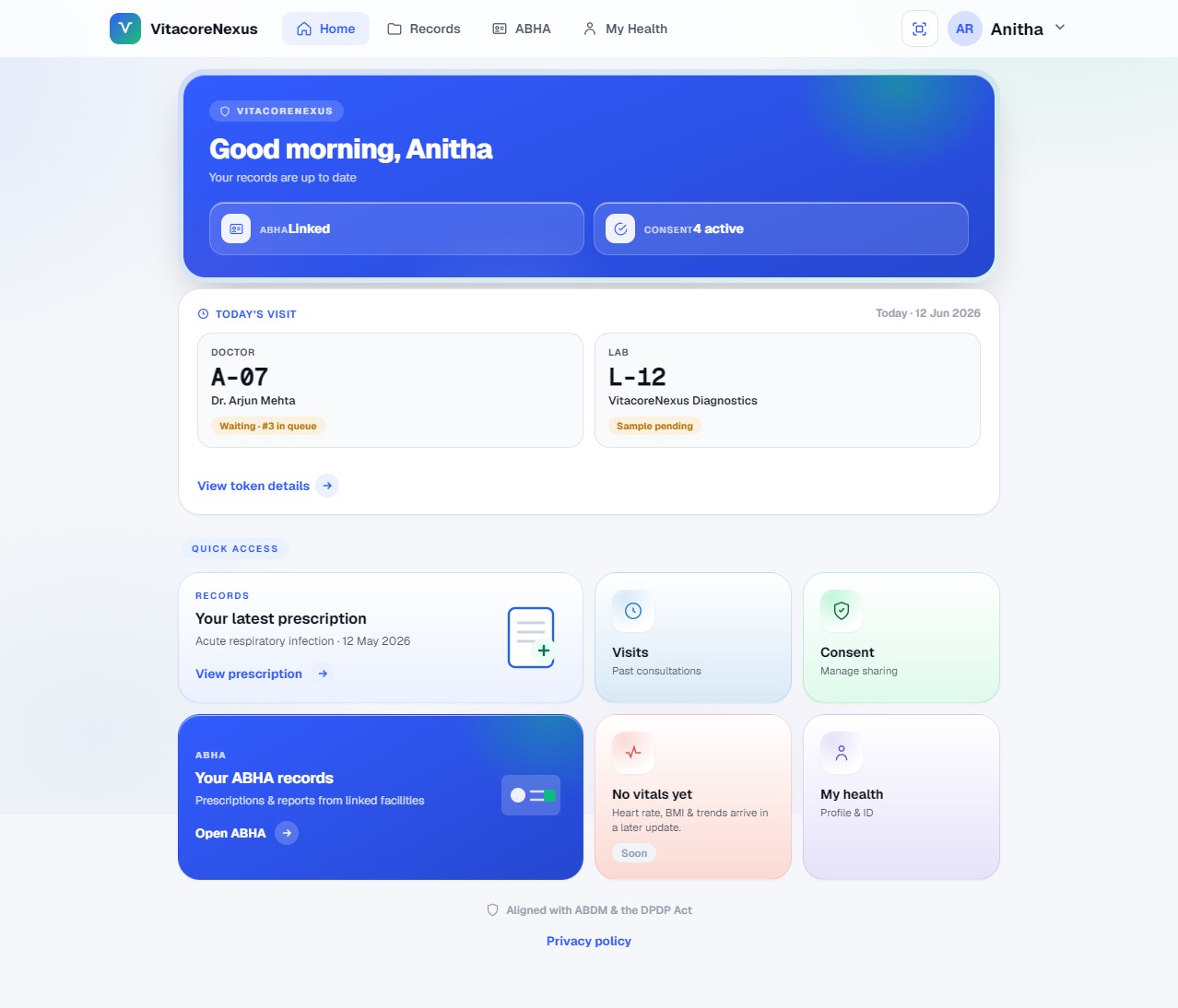
VitacoreNexus HMS is a hospital and clinic management system I designed: five role-built portals (reception, nurse, doctor, admin, and a patient app) sharing one consent-audited record, built offline-first and aligned with India's ABDM/ABHA health-ID standards.
Services:
Challenge:
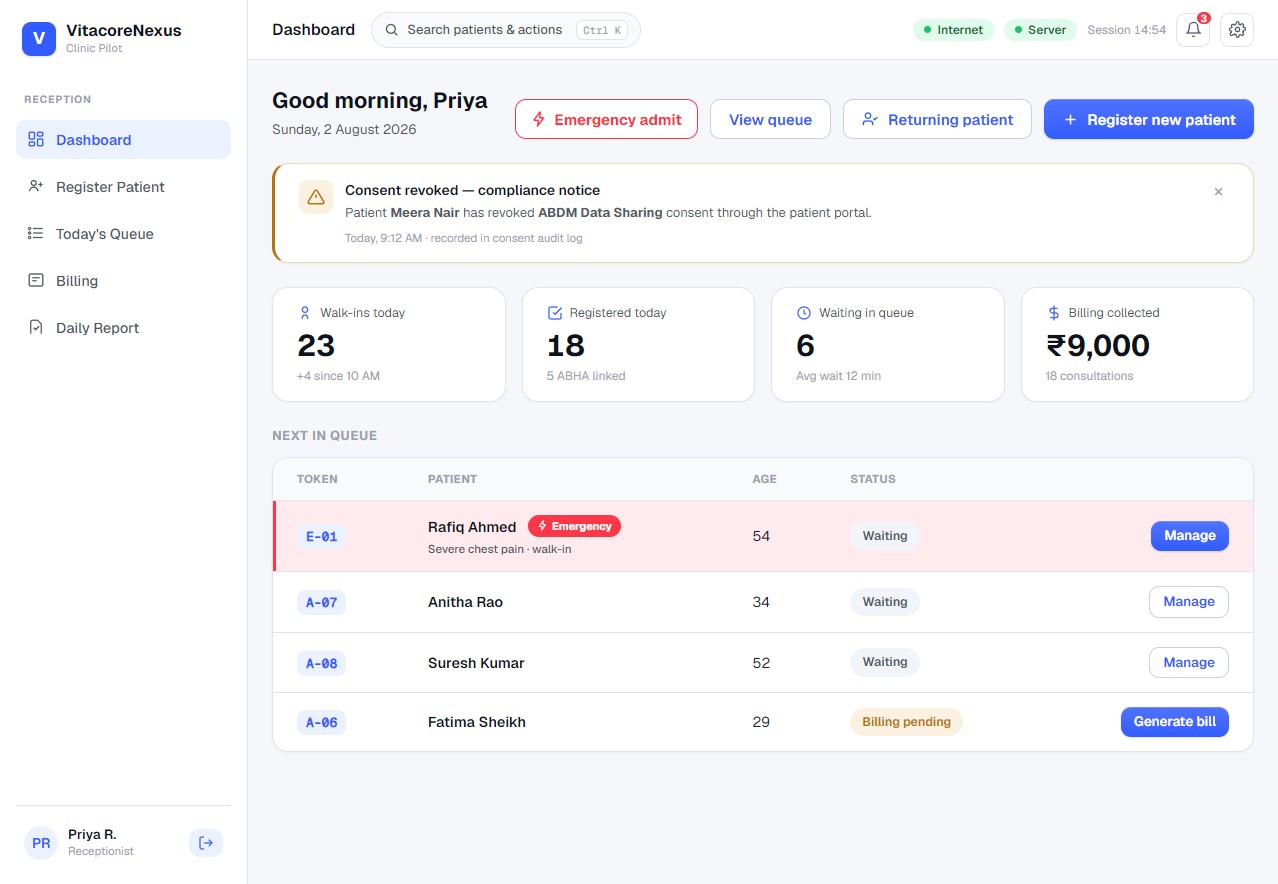
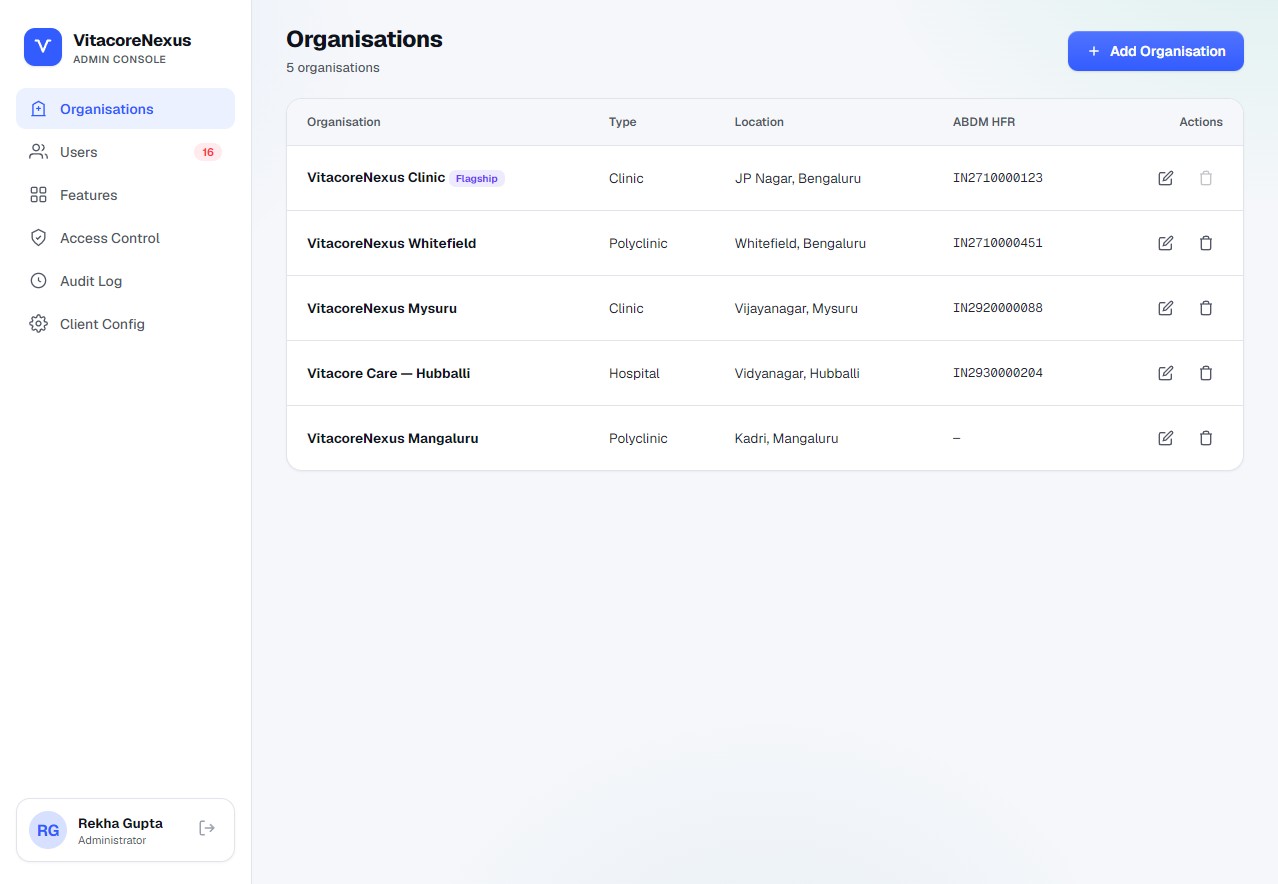
Clinic staff each need a completely different view of the same visit: reception registering a walk-in in under two minutes, a nurse logging vitals, a doctor prescribing, an admin auditing access, and none of it can stall when the clinic's internet does.
Role:
Designed all five portals end-to-end: the shared design system, the offline-sync model for doctor and nurse screens, the consent-audit trail patients and receptionists can't edit, and the ABDM/ABHA-aligned patient app.
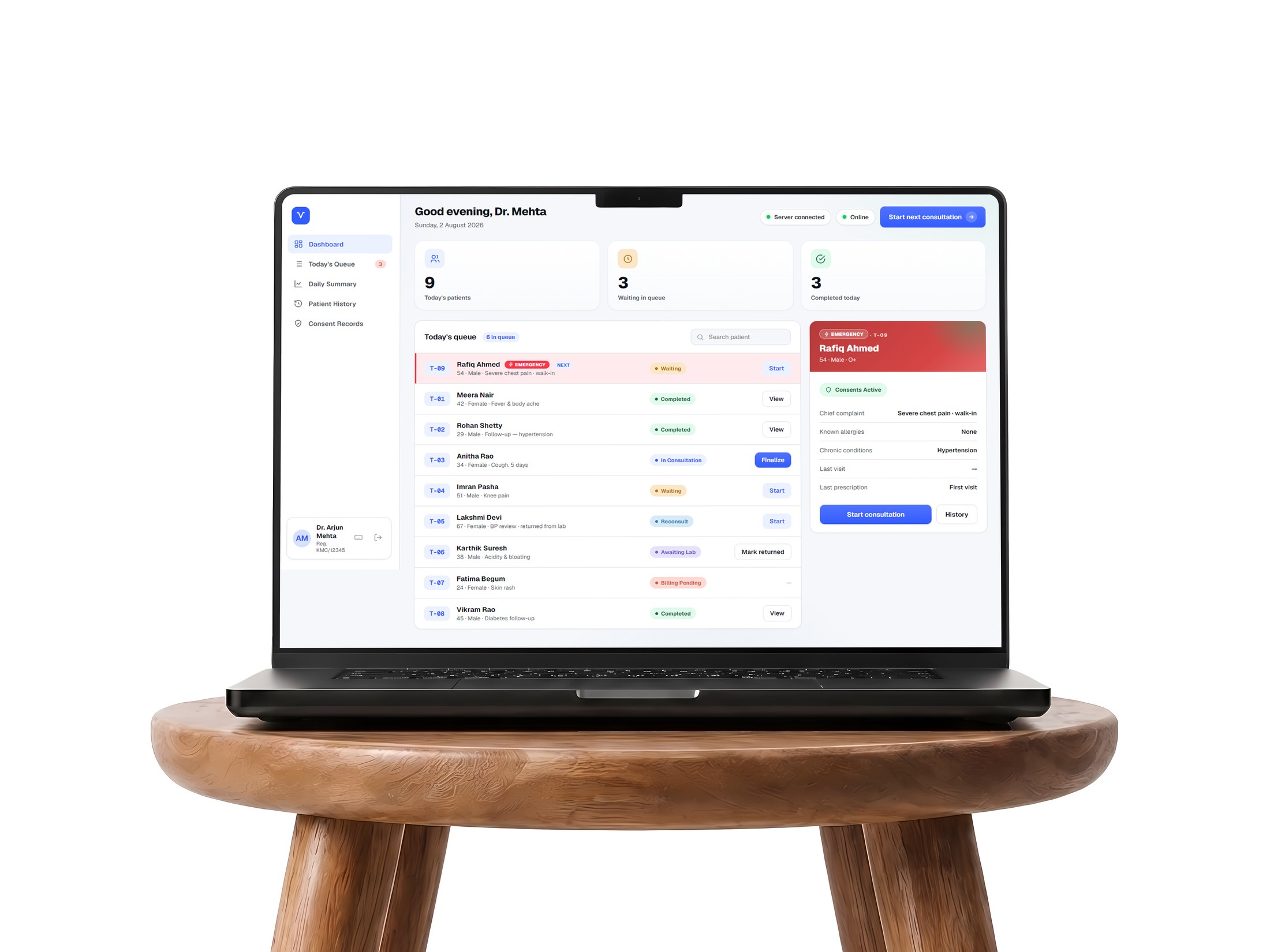 VitacoreNexus HMS
Clinic software built for one screen ends up being used badly by everyone else: reception re-typing what the doctor already wrote, consent scattered across paper forms, and the whole desk stalling the moment the internet drops.
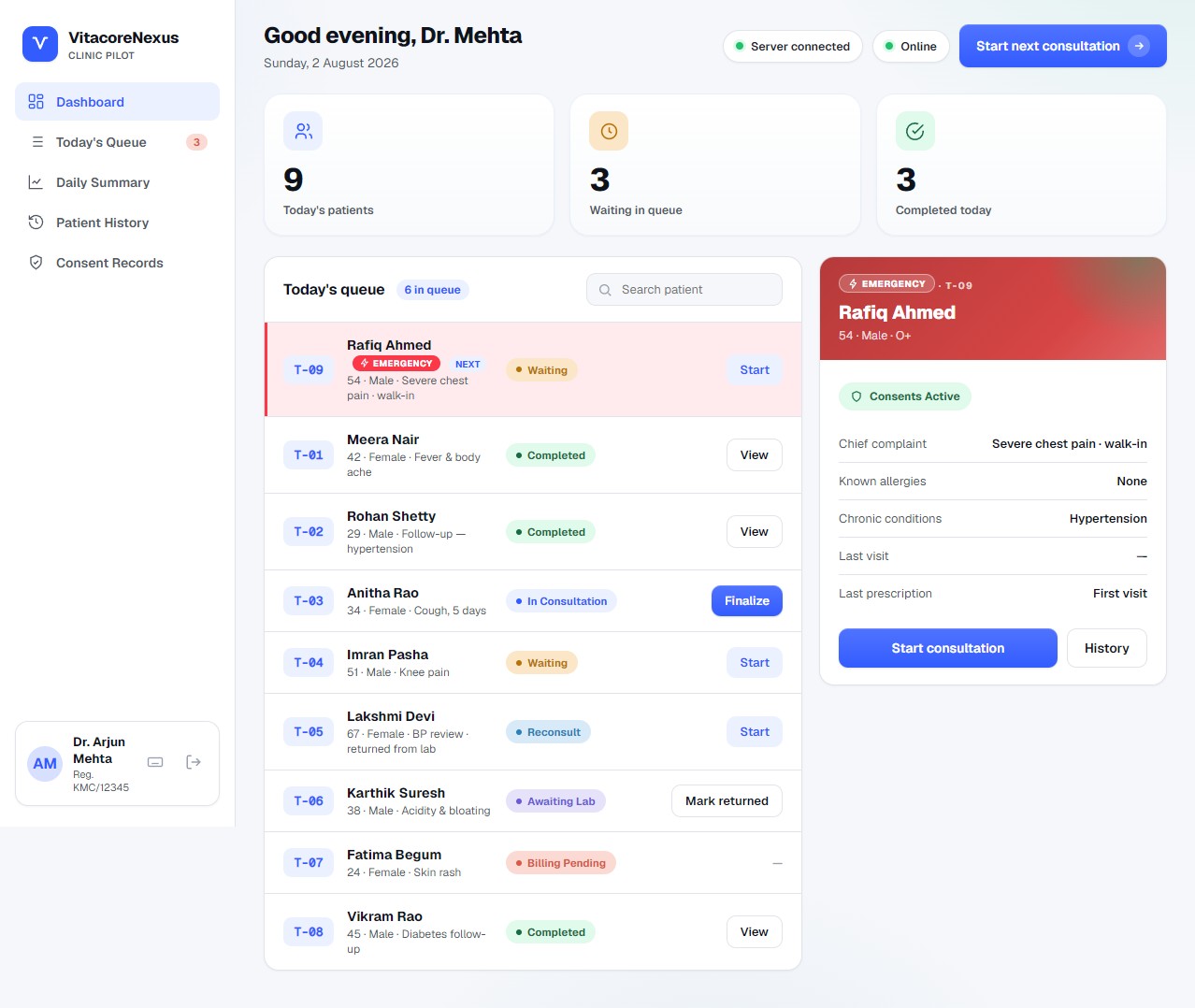
VitacoreNexus splits the same patient record across five role-built portals (reception, nurse, doctor, admin, and the patient's own ABHA-linked app), each offline-capable, each writing to one consent-audited record instead of five disconnected ones.
By the Numbers
One record, every role.
Nexus
Status: Shipped to Dev Team
Design complete and handed off for development.
- Five role-built portals, one shared patient record
- Offline-capable doctor & nurse screens
- ABDM/ABHA-aligned patient consent & health ID
Explore the Product
Outcome
VitacoreNexus splits one patient record across five purpose-built portals instead of forcing every role into a single generic interface, so reception can register a walk-in without touching the prescription fields a doctor needs. The offline-sync model means doctor and nurse screens keep working through a dropped connection, syncing once it returns rather than blocking care. Every write ties back to one consent-audited record, replacing paper consent forms with a trail patients and receptionists can't quietly edit. Design shipped complete to the development team as one coherent system, with a shared component library, so five distinct portals could be engineered without five different visual languages.
Key Takeaways
- Five portals sharing one record is a data-modeling problem before it's a UI problem - the design system had to be built on top of a consistent state model, not the other way around.
- Offline-first isn't a checkbox; it changes what a screen is allowed to assume, down to how sync status gets communicated without alarming a doctor mid-consultation.
- Designing for regulatory alignment (ABDM/ABHA) taught me to treat compliance constraints as design inputs early, not a checklist applied after the fact.
- A consent-audit trail is only trustworthy if it's visibly un-editable - that requirement shaped the UI more than almost anything else in the system.
